
Did you know that failing to accurately estimate your 2026 tax liability could trigger an IRS underpayment penalty rate as high as 7 percent? For many business owners and independent contractors, the fear of an unexpected bill from the IRS is a constant source of anxiety. It's difficult to maintain focus on growth when you're worried about missing the June 15 or September 15 deadlines, or wondering if your fluctuating income will lead to a costly mistake at year-end. Many professionals find that managing these complexities requires more than just a simple spreadsheet; it requires the precision of specialized quarterly tax filing services.
We understand that tax compliance feels like a moving target, particularly with mid-year adjustments like the 2026 business mileage rate increase to 76 cents per mile. This comprehensive guide will show you how to master the "pay-as-you-go" system to achieve predictable cash flow and total peace of mind. We'll explore the specific 2026 thresholds, explain how to use safe harbor rules to protect your assets, and provide a roadmap for choosing a partner to automate your compliance. By the end of this article, you'll have a clear strategy to keep your finances in order and your relationship with the IRS professional and penalty-free.
Key Takeaways
- Understand the mandatory "pay-as-you-go" requirements to ensure your income, self-employment, and alternative minimum taxes are managed accurately throughout the fiscal year.
- Master a systematic method for calculating taxable income and leveraging credits early to maintain a predictable and healthy cash flow.
- Determine if your business complexity warrants the transition from DIY tools to professional quarterly tax filing services for superior data control and proactive deduction planning.
- Navigate specialized compliance challenges, including the volatile nature of cryptocurrency gains and the strategic integration of payroll tax obligations.
- Learn how combining disciplined bookkeeping with expert tax preparation functions as a steadfast defense against IRS audits and unexpected financial penalties.
Defining Quarterly Estimated Taxes: Why the IRS Requires Frequent Filings
The U.S. income tax system operates on a disciplined "pay-as-you-go" model. This structure requires taxpayers to remit funds to the IRS as they earn or receive income throughout the year, rather than waiting until the following spring to settle their accounts. While most traditional employees fulfill this obligation through automatic payroll withholding, the responsibility shifts entirely to the taxpayer when income isn't subject to these deductions. These quarterly payments are comprehensive; they cover your standard income tax, self-employment tax, and the alternative minimum tax (AMT).
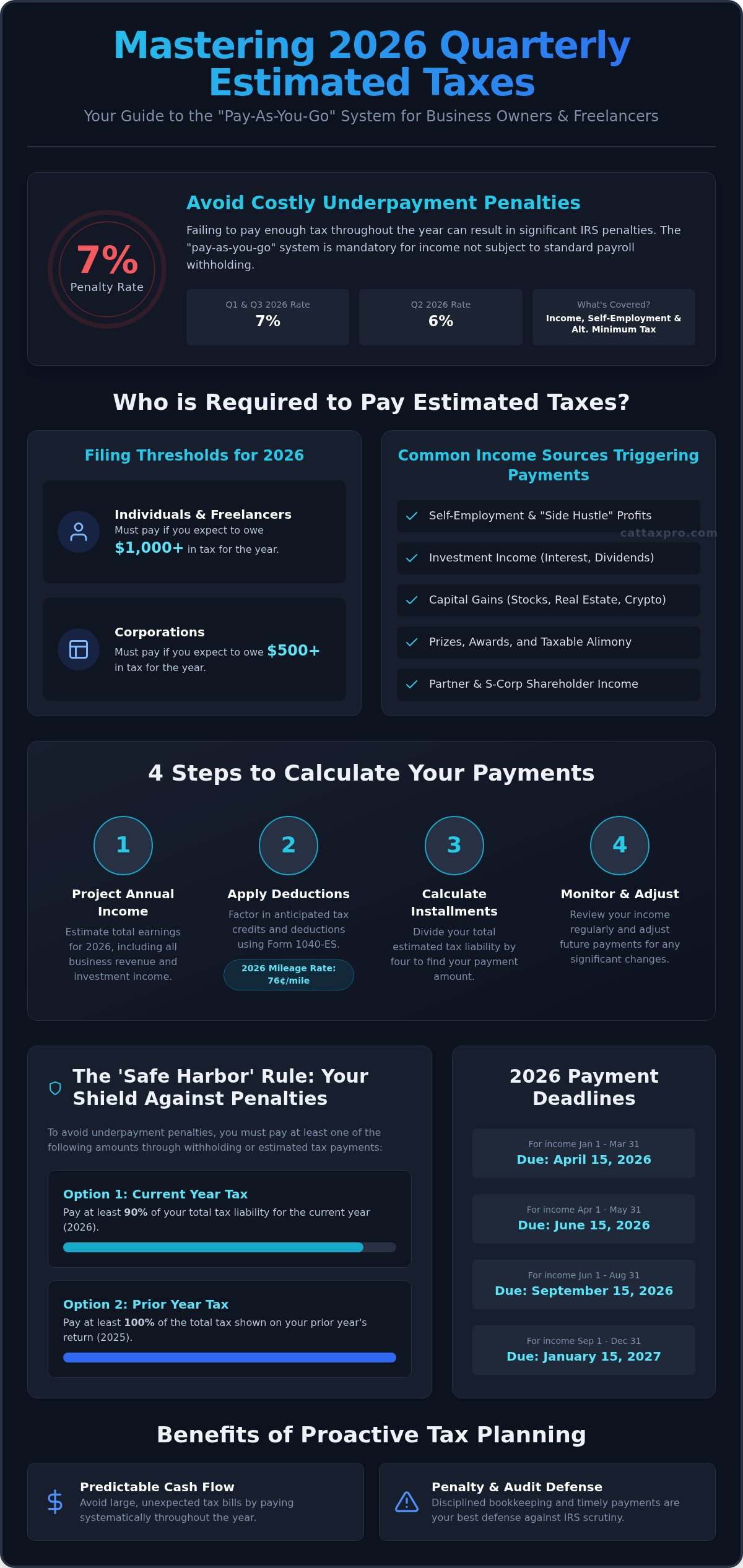
When you fail to remit sufficient funds during the year, the IRS utilizes Form 2210 to calculate underpayment penalties. For 2026, these interest rates are significant, holding at 7 percent for the first and third quarters and 6 percent for the second quarter. This financial friction is entirely preventable with the right management strategy. Engaging professional quarterly tax filing services provides the technical depth needed to calculate these payments accurately, ensuring you maintain a protective barrier between your business and IRS scrutiny.
The $1,000 and $500 Thresholds
The requirement to file isn't universal; it's triggered by specific financial milestones. Individuals, including freelancers, sole proprietors, partners, and S-corp shareholders, must generally make estimated payments if they expect to owe $1,000 or more for the 2026 tax year. However, the standard is even more rigorous for corporations, which must begin filing once their expected tax liability reaches just $500. While there are specific exceptions for farmers and fishermen who meet certain income ratios, most high-income earners must remain vigilant to stay within safe harbor guidelines.
Income Sources That Trigger Quarterly Obligations
Diverse income streams often create unexpected filing requirements. You must account for more than just your primary self-employment earnings or "side hustle" profits. The IRS also tracks investment income, including interest, dividends, and capital gains. This is especially critical for cryptocurrency traders who experience high-volume gains throughout the fiscal year. Additionally, unusual income events like prizes, awards, or taxable alimony payments are subject to these same rules. By leveraging quarterly tax filing services, you can integrate these fluctuating income sources into a cohesive plan that ensures total compliance and eliminates year-end anxiety.
Step-by-Step Guide: How to Calculate and Submit Quarterly Tax Payments
Calculating your quarterly obligations begins with a thorough projection of your annual adjusted gross income (AGI) and taxable income. To ensure your payments remain accurate and compliant, follow these fundamental operational steps:
- Project Annual Income: Estimate your total earnings for the 2026 tax year, including all business and investment revenue.
- Apply Deductions: Use the 1040-ES worksheet to factor in anticipated tax credits and itemized deductions early in the process.
- Calculate Installments: Divide your estimated annual total tax liability by four to establish equal installments for each deadline.
- Monitor and Adjust: Review your income monthly to determine if mid-year adjustments are necessary due to revenue fluctuations.
Stagnant calculations often lead to financial friction. If your business experiences a sudden surge in revenue or an unexpected loss, you must adjust your remaining payments to reflect that change and avoid overpayment or penalties. Professional bookkeeping services ensure your data is always current, making these mid-year recalibrations seamless rather than stressful.
Utilizing the 'Safe Harbor' Rule
The safe harbor rule provides a strategic shield against underpayment penalties. By paying either 90 percent of your current year's tax or 100 percent of the total tax shown on your prior year's return, you can avoid IRS friction regardless of how much your income grows. Professional quarterly tax filing services often recommend this approach to provide clients with absolute certainty during high-growth phases.
For high-income earners with an AGI exceeding $150,000, the safe harbor requirement increases to 110 percent of the previous year's tax liability.
Submission Methods: IRS Direct Pay and EFTPS
Navigating the IRS requirements for estimated taxes requires selecting a reliable submission method that matches your business structure. The Electronic Federal Tax Payment System (EFTPS) is the gold standard for business entities, offering a secure, traceable history of every transaction and the ability to schedule payments up to a year in advance. While some taxpayers still prefer mailing paper vouchers with physical checks, this method lacks the immediate confirmation and security of digital platforms.
Setting up recurring payments through quarterly tax filing services or the EFTPS portal eliminates the risk of missing a deadline due to administrative oversight. This methodical approach ensures your tax obligations are handled with the same discipline as your other essential business operations.
Evaluating Quarterly Tax Filing Services: Professional Accounting vs. DIY Software
Choosing between automated digital tools and a dedicated accounting partner is a pivotal decision for any growth-oriented enterprise. While off-the-shelf software provides a basic framework for individuals with static income, it often lacks the strategic depth required to manage complex business structures. Professional quarterly tax filing services offer more than just data entry; they provide a proactive planning environment where deductions are maximized before the quarter concludes. This strategic oversight transforms tax compliance from a reactive annual hurdle into a managed business function that preserves your capital.
The hidden cost of the DIY approach is frequently measured in lost time and missed opportunities. When you spend hours reconciling ledgers and interpreting changing regulations, you're diverting energy away from high-level business development. A professional firm functions as a steadfast defender of your financial interests, offering IRS audit representation that software simply cannot provide. Having a licensed expert handle high-pressure negotiations with regulatory bodies offers a level of security that digital platforms fail to replicate.
When to Upgrade from Software to a Professional
Your business has likely outgrown basic tax software if you manage multiple employees, navigate high-volume cryptocurrency transactions, or operate across state lines. These complexities introduce variables that standard algorithms often overlook. According to the guidelines in IRS Publication 505, the accuracy of your estimated payments is paramount to avoiding penalties. A human advocate provides the necessary nuance during IRS disputes, ensuring that your specific business context is considered. Professional ledger management prevents the small errors in quarterly projections that eventually snowball into significant year-end liabilities.
The Role of Integrated Bookkeeping
Quarterly filing is only as accurate as the data supporting it. Integrating your tax strategy with professional bookkeeping services creates a complete financial ecosystem where your liability is tracked in real time. This "service-to-benefit" logic ensures that every transaction is categorized correctly, providing a clear map of your fiscal health. By utilizing QuickBooks setup and training from experienced professionals, you gain better data control and reduce the stress of the January 15 deadline. This organized approach allows for "real-time" tax liability tracking, meaning you're never surprised by the amount due at the end of a profitable quarter.
Specialized Compliance: Managing Crypto Assets and Payroll Within Quarterly Filings
The integration of digital assets into modern portfolios has introduced a new layer of technical complexity to the 2026 tax landscape. High-frequency traders and investors must now contend with the 1099-DA reporting requirements for digital asset transactions. These rules demand meticulous record-keeping of every trade, swap, and transfer. Unlike traditional securities, the extreme volatility of cryptocurrency markets means your estimated tax liability can shift dramatically within a single quarter. Specialized quarterly tax filing services are essential for navigating these fluctuations. Professional oversight ensures that capital gains are calculated with precision to prevent massive year-end surprises that could jeopardize your liquidity.
Managing these high-stakes requirements requires a disciplined approach to data. When income is unpredictable, the risk of underpayment increases. This is where the expertise of a seasoned partner becomes invaluable. A meticulous expert functions as both a strategic guide and a steadfast defender, ensuring your filings reflect the current digital financial landscape while maintaining a foundation in classic accounting principles.
Cryptocurrency and Estimated Tax Liability
Accurately tracking cost basis is the fundamental pillar of digital asset compliance. You must account for capital gains or losses on every trade. You are also required to recognize income from airdrops, staking rewards, and hard forks at their fair market value at the precise time of receipt. These events trigger immediate tax obligations that must be reflected in your quarterly installments to avoid the 7 percent interest penalty. To maintain absolute accuracy, crypto investors must reconcile their portfolios monthly to ensure their quarterly filings reflect real-time market activity rather than outdated projections. This level of detail-oriented management is the only way to achieve true security in a volatile market.
Payroll Administration and Tax Withholding
For business owners, the challenge of quarterly compliance often intersects with payroll administration. You must ensure that employee withholdings are remitted to the IRS correctly and on time. Simultaneously, you must calculate your own owner-level estimated payments. Common administrative errors in payroll often lead to severe IRS penalties, particularly when tax deposits are delayed or miscalculated. Utilizing a unified approach that aligns your bookkeeping with your payroll and quarterly tax filing services creates a protective system of record. This synchronization protects your business through a categorical flow of data where professional oversight ensures every dollar is accounted for and every deadline is met.
If you are managing high-volume digital trades or complex payroll schedules, our Cryptocurrency Accounting Services provide the specialized defense you need to remain compliant and secure.
Streamlining Your 2026 Compliance with Catherine Accounting & Tax Services
Catherine Accounting & Tax Services LLC provides a sophisticated framework for managing your fiscal responsibilities with absolute precision. We deliver comprehensive tax preparation tailored to the unique needs of both individual high-earners and modern business entities. Our firm functions as a strategic guide and a steadfast defender, offering authoritative IRS audit representation that protects your financial interests from regulatory friction. When you engage our professional quarterly tax filing services, you transition from a state of reactive stress to one of comprehensive reliability. We ensure that your 2026 filings reflect the most current tax law adjustments while maintaining a foundation in classic accounting principles.
Our expertise extends into the modern digital financial landscape, providing specialized support for digital asset investors and high-volume traders. We understand that the 2026 tax environment requires more than just basic math; it requires a deep familiarity with fluctuating income and complex reporting requirements like the 1099-DA. We stand ready to handle high-pressure negotiations with regulatory bodies, ensuring that your business remains stable and your long-term wealth is protected. It's our commitment to your stability that defines our role as your protective financial partner.
From Bookkeeping to Boardroom: Our Full-Service Model
We handle the technical heavy lifting of data entry and ledger reconciliation so you can remain focused on business growth. Our integrated model ensures that your bookkeeping flows directly into your tax strategy, providing a sense of order in an often chaotic regulatory environment. We utilize our QuickBooks setup and training expertise to transform your raw financial data into an actionable tax strategy. This methodical oversight ensures every quarterly deadline is met with precision, moving beyond simple compliance toward long-term financial stability. By creating a complete and well-mapped financial ecosystem, we provide the peace of mind that comes from knowing a meticulous expert is overseeing every detail of your accounts.
Getting Started with Professional Quarterly Support
The path to secure compliance begins with a structured and thorough onboarding process. We initiate a comprehensive financial cleanup to ensure your historical data is accurate before we establish your regular filing schedules for the remainder of 2026. This disciplined approach allows us to identify potential deductions and risks before they impact your cash flow. Scheduling a consultation provides an opportunity to evaluate your current tax strategy and identify the specific tiers of service that align with your business operations. We've designed our services to be accessible yet formal enough to command respect from regulatory bodies. We invite you to secure your financial future with Catherine Accounting & Tax Services LLC.
Securing Your Financial Stability for the 2026 Tax Year
Mastering the 2026 tax landscape requires more than just meeting deadlines; it demands a disciplined approach to data management and regulatory compliance. You've seen how the pay-as-you-go system functions and how utilizing safe harbor rules protects your assets from the 7 percent underpayment penalty. Whether you're navigating the complexities of high-volume digital asset trades or managing a growing payroll, the accuracy of your estimates is the foundation of your long-term security. Professional quarterly tax filing services transform these high-stakes requirements into a managed, predictable business function that preserves your capital.
Catherine Accounting & Tax Services LLC provides the national tax compliance expertise required to navigate these complexities with confidence. We offer specialized cryptocurrency accounting and expert IRS audit representation to ensure your financial interests are always defended. Don't let administrative confusion or fluctuating income jeopardize your peace of mind. You can Schedule a Consultation for Professional Quarterly Tax Support today to ensure your 2026 strategy is both proactive and precise. We look forward to helping you maintain a stable and compliant financial future.
Frequently Asked Questions
What are the specific quarterly tax deadlines for 2026?
The 2026 federal quarterly deadlines are April 15, June 15, September 15, and January 15, 2027. Maintaining a disciplined schedule with these dates is essential to avoid unnecessary interest charges. If a deadline falls on a weekend or legal holiday, the due date moves to the next business day. Utilizing professional quarterly tax filing services ensures these critical milestones are never overlooked during your busy operational periods.
Can I skip a quarterly payment if I didn't make any money this quarter?
You aren't required to make a payment for a quarter in which you had no taxable income, provided your total annual payments meet safe harbor requirements. However, you must carefully monitor your year-to-date cumulative earnings. If your income spikes in a later quarter, you might need to make a larger catch-up payment to remain compliant and avoid back-dated interest charges on the annual total.
How do I calculate quarterly taxes if my income is highly seasonal?
Seasonal businesses should utilize the Annualized Income Installment Method to align their tax payments with actual cash flow. This method allows you to pay more during profitable months and less during slow periods, protecting your liquidity. It is a complex calculation that requires meticulous bookkeeping, but it prevents you from overpaying early in the year when your business revenue might be at its lowest point.
What happens if I underpay my quarterly taxes but pay the full amount in April?
Paying in full in April doesn't erase penalties for underpayments made during the previous year. The IRS operates on a pay-as-you-go basis, so interest accrues from the date each quarterly installment was originally due. In 2026, these interest rates are as high as 7 percent. It's much more cost-effective to pay accurately throughout the fiscal year than to settle a large balance at year-end.
Is there a penalty for paying quarterly taxes a few days late?
Yes, the IRS charges interest on any portion of a tax payment that is received after the official deadline. This penalty is calculated daily based on the amount owed and the current interest rate for that quarter. Even a delay of a few days creates avoidable financial friction. Maintaining a disciplined filing schedule is the most reliable way to ensure your capital remains in your business accounts.
How do cryptocurrency gains affect my quarterly tax estimates?
Realized cryptocurrency gains are taxable events that you must include in your estimated income for the quarter the trade occurred. Because digital asset markets are volatile, monthly reconciliation is necessary to track cost basis and capital gains accurately. Failing to account for a significant gain early in the year can lead to substantial underpayment penalties by the time you file your annual return in April.
Should I pay quarterly taxes through my business or personal account?
You should generally remit payments from the account that matches your specific tax filing entity. Sole proprietors and single-member LLCs often pay from personal accounts because the tax liability is individual, while C-corporations must pay from business accounts. Regardless of the account you choose, keeping a clear paper trail is vital for accurate bookkeeping and potential audit representation in the future.
Does hiring a quarterly tax filing service reduce my risk of an IRS audit?
While no service can eliminate audit risk entirely, engaging professional quarterly tax filing services significantly reduces common red flag errors that trigger IRS scrutiny. Professionals ensure that your deductions are legitimate and your income reporting is consistent with all reported data. This meticulous attention to detail projects a sense of comprehensive reliability and order, which can mitigate the likelihood of a manual regulatory review.


