
Why do most taxpayers treat April as a deadline for panic rather than the finish line of a year-long strategy? For many, the filing season is defined by the frantic search for missing receipts and the persistent fear of an overlooked deduction. It's common to feel a sense of confusion when reporting complex assets like cryptocurrency or managing the nuanced requirements of individual tax planning and preparation. You deserve a disciplined approach that replaces seasonal uncertainty with professional order and protective advocacy.
Mastering your financial future begins with a shift in perspective. Effective tax management isn't a one-time event; it's a continuous process of meticulous oversight and strategic foresight. This comprehensive guide provides a clear roadmap to ensure you remain in full compliance while actively working to lower your tax liability. We'll walk through a strategic checklist for 2026 that helps you organize audit-proof records and implement precise preparation strategies designed to protect your long-term stability and peace of mind.
Key Takeaways
- Learn why shifting from seasonal filing to a year-round strategy is essential for reducing long-term tax liability and avoiding last-minute stress.
- Follow a disciplined quarterly roadmap for individual tax planning and preparation to optimize adjustments and meet every 2026 deadline with confidence.
- Understand the rigorous reporting requirements for cryptocurrency and digital assets to ensure full compliance with evolving IRS mandates.
- Discover how to maintain audit-proof financial records that provide a robust defense and professional order during regulatory inquiries.
- Identify strategic methods for optimizing your Adjusted Gross Income (AGI) by navigating the complexities of itemized versus standard deductions.
Beyond the April Deadline: The Value of Individual Tax Planning
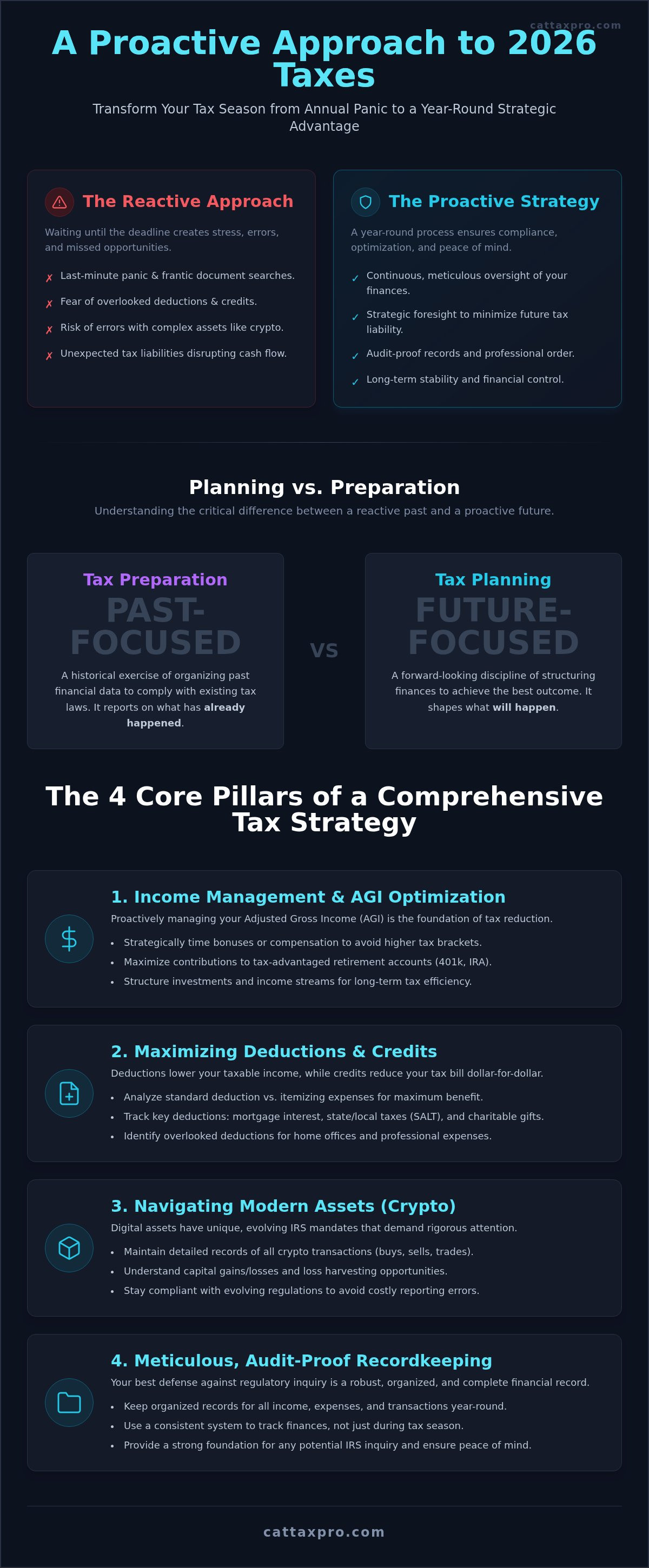
Most taxpayers view April 15th as a finish line. In reality, it's merely a reporting deadline for financial events that have already occurred. True financial security requires a fundamental shift from reactive preparation to proactive foresight. While preparation deals strictly with the past, individual tax planning and preparation as a unified, year-round strategy focuses on your future outcomes. This disciplined approach allows high-earning individuals to view every financial move through a tax-efficient lens. It ensures that investments and income streams are structured to minimize liability long before the year concludes.
The intricate nature of the U.S. income tax system makes it remarkably easy to overlook subtle opportunities for savings. For the 2026 fiscal year, this level of discipline is no longer optional. Evolving regulations surrounding digital assets and cryptocurrency mean that waiting until spring to organize your records often results in irreversible reporting errors or missed capital loss harvesting opportunities. By maintaining a consistent focus on your fiscal health, you position yourself as a prepared strategist rather than a stressed respondent. This proactive stance is your best defense against the complexities of modern regulation.
The Financial Impact of Proactive Tax Strategies
The cost of reactive filing is often hidden in missed deductions and inefficient asset placement. When you wait until the last minute, you lose the power to make adjustments that lower your Adjusted Gross Income. Strategic planning prevents the common "tax surprise" where an unexpected liability disrupts your personal cash flow or retirement goals. Beyond the immediate monetary savings, there's a profound psychological benefit to this sense of order. Knowing your records are audit-proof and your strategy is sound provides a level of security that automated software simply cannot replicate. It's about maintaining control over your financial narrative.
Tax Planning vs. Tax Preparation: A Comparison
Tax preparation is a historical exercise; it's the methodical process of organizing data to comply with existing laws. Planning, conversely, is a forward-looking discipline. While basic software can process a standard return, it can't provide the strategic guidance needed for "trigger events." These events include selling a primary residence, shifting a complex cryptocurrency portfolio, or managing a significant inheritance. A professional guide identifies these moments as they happen. This real-time oversight ensures that every transaction serves your long-term stability. If you've experienced a shift in your investment portfolio or a change in your filing status, a mid-year review is a defensive necessity that protects your wealth from unnecessary erosion.
Core Pillars of a Comprehensive Individual Tax Strategy
A successful financial strategy rests on four specific structural pillars. These include income optimization, deduction management, credit utilization, and meticulous recordkeeping. When you integrate these elements into your routine, individual tax planning and preparation becomes a streamlined exercise in wealth preservation rather than a source of annual anxiety. By identifying the specific mechanisms that influence your taxable bottom line, you can make informed decisions that align with your long-term stability.
Income Management and AGI Optimization
Your Adjusted Gross Income (AGI) is the primary figure the IRS uses to calculate your tax liability; it represents your total gross income minus specific adjustments like student loan interest or retirement contributions. Managing this number is a fundamental part of a sophisticated strategy. If you anticipate a high-earning year, timing the receipt of bonuses or deferred compensation can prevent you from crossing into a higher tax bracket. Maximizing contributions to tax-advantaged retirement accounts is another effective method. It reduces your current taxable income while simultaneously building a secure foundation for your future.
Maximizing Deductions and Credits
Choosing between the standard deduction and itemized deductions requires a careful analysis of your annual expenses. For 2026, high-earners often find that itemizing provides greater relief if they have significant mortgage interest, state and local taxes, or charitable contributions. Tracking these expenses in real-time ensures nothing is forgotten. Remote professionals and entrepreneurs should pay close attention to home office deductions and specialized equipment costs that are often overlooked. Additionally, federal tax credits for energy-efficient home improvements or family-related expenses offer a dollar-for-dollar reduction in your tax bill. These credits are more valuable than deductions, yet they require precise documentation to claim safely.
The IRS consistently advocates for year-round tax planning to ensure taxpayers don't miss these critical opportunities. Establishing professional order is significantly easier when you utilize specialized bookkeeping services to track every deductible expense as it occurs. This disciplined approach to individual tax planning and preparation creates a transparent trail for the IRS and provides you with a clear roadmap for your financial growth. Maintaining digital records of all receipts and donation acknowledgments is the final step in securing an audit-proof financial profile.
The 2026 Individual Tax Planning and Preparation Checklist
A disciplined timeline is the foundation of financial order. Without a chronological roadmap, even the most robust strategy can falter under the pressure of competing deadlines. By breaking your responsibilities into quarterly objectives, you ensure that individual tax planning and preparation remains a manageable, proactive process. This methodical approach allows you to address regulatory changes as they arise rather than reacting to them during the peak of filing season. It positions you as a strategic guide of your own wealth.
The IRS encourages year-round tax planning to help individuals avoid the stress of last-minute document gathering. For 2026, this is especially critical as reporting requirements for digital assets continue to tighten. A steady, deliberate pace ensures you're always prepared for whatever regulatory contingencies may arise.
Seasonal Tasks for Financial Accuracy
Your annual cycle begins with a focus on historical accuracy and transitions into future adjustments. Consistency in these early months prevents errors that could trigger unwanted IRS attention later on. It's about building a stable and protective foundation for your filings.
- January to March: Focus on administrative collection. Gather all W-2s, 1099s, and investment statements. Review your previous year's results to set performance benchmarks for 2026. Setting these goals early allows for more disciplined management throughout the year.
- April to June: Conduct a post-filing audit of your own finances. Update your W-4 forms to reflect life changes like a new home purchase or a change in marital status. This ensures your withholdings are precise and prevents a large, unexpected bill next spring.
- July to September: Evaluate your side-hustle income and self-employment earnings. Use this window to calculate and submit estimated tax payments to avoid underpayment penalties. It's also the ideal time to assess investment performance and begin harvesting capital losses to offset gains.
Year-End Finalization Strategies
The final quarter of the year is the most significant window for active liability reduction. It's the period where strategic choices directly impact your final tax bill. This is when you must reconcile your digital and traditional portfolios to ensure total compliance and peace of mind.
Between October and December, prioritize the timing of medical expenses and charitable gifts. If you're close to a deduction threshold, accelerating these payments can provide a significant benefit. For those with digital assets, this is the time to review transactions for 1099-DA compliance. The IRS increasingly focuses on crypto reporting; ensuring your individual tax planning and preparation includes a review of these digital records is a defensive necessity.
Finally, ensure your QuickBooks records are fully reconciled. A clean handoff to your tax professional depends on the accuracy of your bookkeeping throughout the year. Maximizing your retirement contributions before December 31st is your last opportunity to lower your taxable income for the 2026 fiscal year. By following this structured checklist, you replace seasonal anxiety with professional confidence.
Navigating Modern Tax Complexities: Crypto and IRS Defense
Modern financial portfolios often extend well beyond traditional stocks and bonds. For many, digital assets represent a significant portion of their net worth, yet these investments bring a unique set of regulatory burdens that traditional assets don't share. Integrating digital asset management into your individual tax planning and preparation is no longer a niche requirement; it's a fundamental necessity for maintaining compliance in an era of increased oversight. The IRS has made it clear that digital transactions are a primary focus for enforcement, requiring a more disciplined approach to documentation than ever before. This modern landscape demands a partner who is equally comfortable with classic accounting principles and the intricacies of blockchain technology.
Cryptocurrency Reporting and 1099-DA Compliance
The IRS classifies cryptocurrency as property, which means every trade, sale, or exchange constitutes a taxable event. Calculating capital gains or losses accurately requires tracking the cost basis across multiple hardware wallets, centralized exchanges, and decentralized platforms. This becomes even more complex when you factor in NFT trades and DeFi activities like staking or liquidity providing. For the 2026 tax year, the 1099-DA reporting requirement mandates that digital asset brokers provide the IRS with specific data on gross proceeds and cost basis for your transactions. This level of transparency means that any discrepancy between your records and the broker's report could trigger a red flag. Maintaining precise, real-time records is the only way to ensure your reporting is accurate and defensible. It's about establishing a clear trail of ownership and value that stands up to the most rigorous scrutiny.
IRS Audit Representation and Advocacy
Receiving an IRS notice or letter of inquiry often creates a sense of vulnerability. It's vital to remember that a strategic response can prevent a routine inquiry from escalating into a high-pressure dispute. You should never face an IRS auditor or respond to complex notices without professional support. A steadfast defender understands the nuances of the tax code and acts as a buffer between you and the regulatory body. This professional advocacy ensures that your rights are protected throughout the resolution process. When your individual tax planning and preparation is handled with meticulous care from the start, you already possess the audit-proof records needed to resolve issues quickly. The goal is to reach a resolution that minimizes your stress and protects your assets from unnecessary penalties. If you're facing a complex digital portfolio or an IRS inquiry, you can secure your financial future by partnering with experts in IRS audit representation and cryptocurrency accounting. This one-stop resource provides the modern competence required to navigate today's digital financial landscape with total peace of mind.
Securing Your Financial Future with Catherine Accounting
Catherine Accounting & Tax Services LLC provides the disciplined oversight required to manage your complete financial ecosystem. Our firm functions as both a strategic guide and a steadfast defender, ensuring that your individual tax planning and preparation remains precise and compliant. We offer a comprehensive suite of services that addresses every tier of financial need, from routine administrative tasks to high-pressure negotiations with regulatory bodies. By combining traditional accounting principles with modern digital competence, we provide a sense of order in a complex fiscal environment.
Our approach is built on meticulous detail and a commitment to your long-term stability. We don't just file your returns; we build a protective framework around your assets. This includes specialized support for cryptocurrency accounting and IRS audit representation, ensuring you never have to face the complexities of the tax code alone. For individual entrepreneurs, our bookkeeping and payroll services provide the professional order necessary to scale with confidence and stay ahead of every deadline.
A Stable Partner in a Complex Regulatory Landscape
The emotional weight of tax season often stems from the fear of the unknown. Our firm addresses this anxiety through a blend of professional authority and reassuring advocacy. Unlike impersonal corporate teams, we position ourselves as a stable partner that understands the sensitive nature of your financial issues. We act as a "one-stop" resource, meaning you don't have to coordinate between multiple advisors to manage your traditional and digital portfolios. This categorical flow of service ensures that every possible financial contingency is considered and resolved.
Empowerment is a core pillar of our methodology. We provide QuickBooks setup and training to give you the tools needed for ongoing financial organization. This technical training transforms your daily recordkeeping into a streamlined process that supports your year-end goals. When you have the right systems in place, the stress of document gathering disappears. It's replaced by the peace of mind that comes from knowing your records are audit-proof and professionally managed.
Next Steps for Your 2026 Tax Plan
Moving from automated DIY software to professional advocacy is the most significant step you can take toward wealth preservation. While software can handle basic arithmetic, it cannot provide the strategic foresight or the defensive representation that a licensed expert offers. A proactive tax review allows us to identify savings opportunities before they expire and ensure your reporting aligns with the latest 2026 regulations. This shift in perspective is what separates those who react to taxes from those who master them.
Securing your financial future requires action today rather than reaction next April. Scheduling an initial consultation is the first step toward a more disciplined and secure financial roadmap. We're ready to help you implement the strategies discussed in this guide, from AGI optimization to robust individual tax planning and preparation. It's time to secure your financial peace of mind with Catherine Accounting & Tax Services LLC. Our team is dedicated to providing the comprehensive reliability you need to protect your wealth and your future.
Take Command of Your Financial Future
Transitioning from seasonal filing to a year-round strategy is the most effective way to secure your wealth and eliminate April anxiety. By implementing a quarterly checklist and optimizing your Adjusted Gross Income, you ensure every financial move serves your long-term stability. This disciplined approach to individual tax planning and preparation allows you to navigate evolving 2026 regulations with professional confidence and total compliance.
Whether you require specialized cryptocurrency accounting for a complex digital portfolio or expert IRS audit representation to defend your rights, we provide the authoritative guidance you deserve. Our national service coverage ensures that high-earning individuals across the country have access to a steadfast defender and a meticulous strategic partner. You don't have to manage these high-stakes requirements on your own. Request a strategic tax planning consultation today to begin building your audit-proof financial roadmap. We're committed to your peace of mind and your continued fiscal success.
Frequently Asked Questions
What is the difference between tax planning and tax preparation?
Tax preparation is the process of reporting historical data to the IRS, whereas tax planning is the strategic act of looking forward to influence future financial outcomes. While preparation ensures you meet current filing requirements, planning focuses on structuring your income and investments to minimize long-term liability. This proactive approach allows you to make adjustments throughout the year rather than reacting to a high tax bill in April.
How often should I meet with my tax professional for planning?
You should meet with your tax professional at least once per quarter to review your financial performance and adjust your strategy. Regular check-ins ensure that your withholdings and estimated payments remain accurate as your income or life circumstances change. This disciplined rhythm is a core component of effective individual tax planning and preparation, allowing you to harvest losses or maximize contributions before the year concludes.
Do I need a professional accountant if I only have W-2 income?
You don't always need an accountant for simple W-2 income, but professional guidance is beneficial if you have significant investments or plan to itemize deductions. Experts often identify overlooked credits for energy-efficient improvements or family-related expenses that basic software might miss. A professional review provides the peace of mind that you're not leaving eligible money on the table while ensuring your return is audit-proof.
How does cryptocurrency affect my individual tax preparation?
Cryptocurrency is viewed as property by the IRS, meaning every exchange or sale triggers a capital gain or loss. This complexity requires meticulous cost-basis tracking across all wallets and platforms to avoid reporting discrepancies. Including digital assets in your individual tax planning and preparation is vital for meeting the 1099-DA reporting requirements that take effect for the 2026 fiscal year.
What should I do if I receive a notice from the IRS?
You should first secure professional representation to handle all communication with the agency on your behalf. Directly responding to a notice without expert guidance can lead to unintended disclosures or procedural errors that escalate the situation. A steadfast defender reviews the notice to identify the specific issue and prepares a disciplined response that protects your interests and resolves the inquiry efficiently.
Can tax planning help me if I have a side hustle or 1099 income?
Tax planning is a necessity for 1099 earners because it helps you manage self-employment tax obligations and identify all eligible business deductions. By projecting your income throughout the year, you can calculate precise estimated tax payments to avoid costly underpayment penalties. This strategic oversight ensures you maintain healthy cash flow and prevents the stress of a large, unexpected tax bill during the filing season.
How do I start organizing my records for the 2026 tax year?
Start by establishing a centralized digital system to track all income, expenses, and donation receipts as they occur. Utilizing QuickBooks training helps you reconcile your records in real-time, creating a transparent and organized financial trail. This level of professional order simplifies the filing process and provides a robust first line of defense if the IRS ever requests documentation for your 2026 return.
What are the benefits of professional IRS audit representation?
The primary benefit of professional representation is having an expert advocate who manages all interactions with the IRS and protects your rights. An experienced representative understands the technical nuances of tax law and can navigate high-pressure negotiations to reach a favorable resolution. This service alleviates the anxiety of an audit by providing a steadfast defender who ensures the process remains fair and disciplined.


